E-INVOICING COMPREHENSIVE GUIDE & SYSTEM HAND ON
(1/2 DAY PROGRAMME)
COURSE OBJECTIVE
At the end of this course, participants shall be able to:
Differentiate between traditional invoicing methods and e-invoicing models, identifying the advantages and challenges associated with each.
Navigate the regulatory framework governing e-invoicing in Malaysia, ensuring compliance with IRBM requirements and regulations.
Implement e-invoicing procedures effectively, including the creation, submission, validation, and sharing of e-invoices, while adhering to mandatory fields and file formats.
Assess their organization’s readiness for e-invoicing adoption, identifying areas for improvement and implementing necessary measures for smooth transition.
Utilize reporting and dashboard services provided for taxpayers to monitor and analyze e-invoicing transactions, ensuring accurate tax reporting and compliance.
Address common concerns and queries regarding e-invoicing through an understanding of the latest FAQs published by IRBM, enhancing confidence and proficiency in e-invoicing practices.
COURSE CONTENT
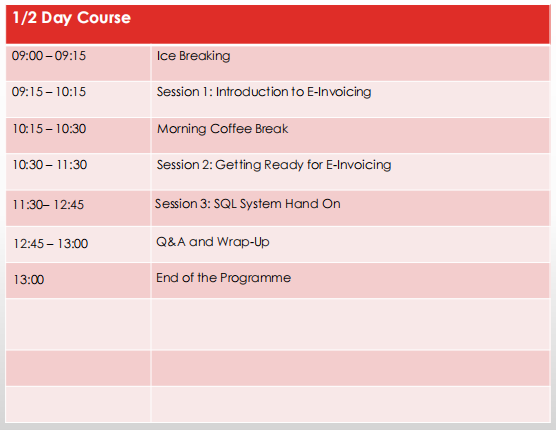
Session 1: Introduction to E-Invoicing
Overview of traditional vs. e-Invoice Model
Benefits of e-invoicing for businesses in Malaysia
E-Invoice Implementation Timeline
Regulatory framework and compliance requirements for e-invoicing in Malaysia
Session 2: Getting Ready for E-Invoicing
Transaction Types
Scenarios and Types of E-Invoice
Exemptions from implementation E-Invoice
E-Invoice Model (MyInvois vs API)
E-Invoice Procedures and Workflow (Step by Step Guidance)
Creation & Submission of E-Invoice
Validation of E-Invoice
Notification of validated E-Invoice
Sharing of E-Invoice
Rejection or cancellation of E-Invoice
Storing of E-Invoice
Reporting and Dashboard Services for Taxpayers
Data Security and Privacy Monitory by IRBM
Assessing Readiness of E-Invoice
List of Required Fields for E-Invoice
List of Mandatory and Optional Fields for E-Invoice